Whole-house treatment addresses scale, staining and smell, which affect every fixture. Drinking water contaminants affect the few gallons a day people consume, and they are treated where they are consumed.
How it works
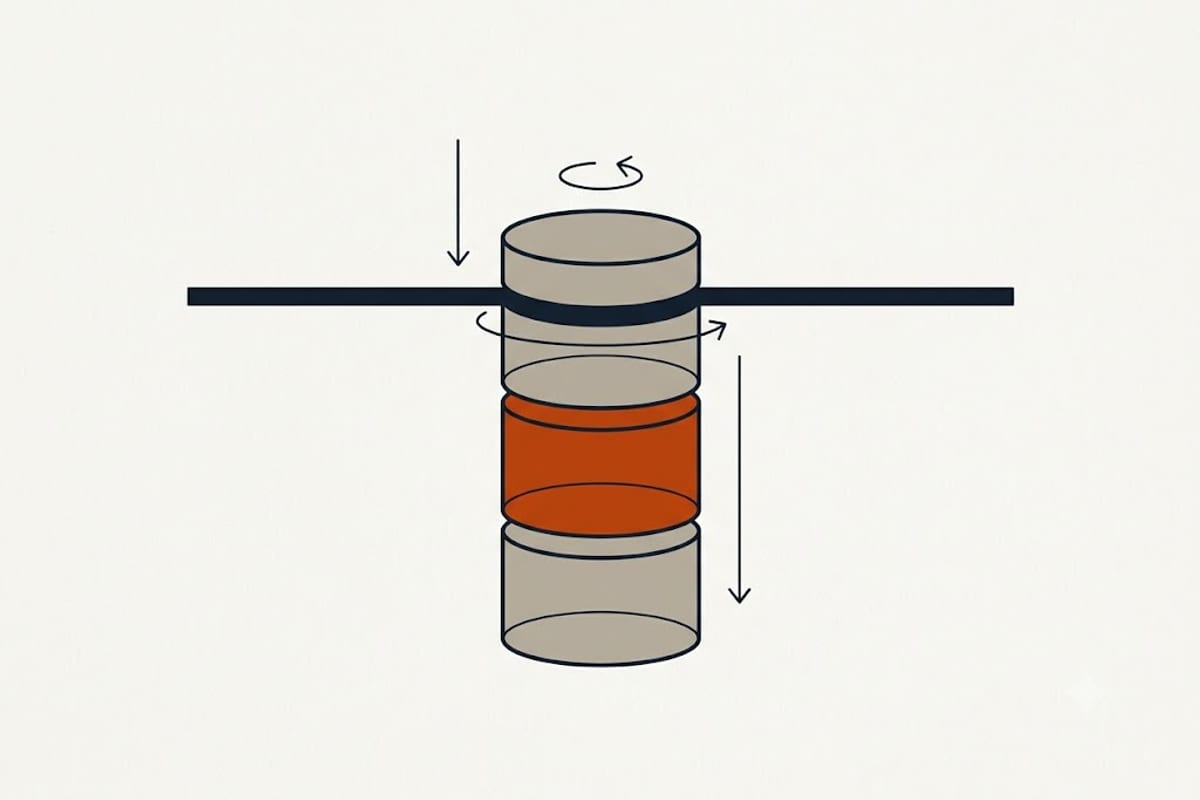
Water is forced against a semi-permeable membrane. Water molecules pass; most dissolved solids do not, and are flushed to the drain.
A typical under-sink system has:
A sediment prefilter, protecting the membrane.
A carbon prefilter, removing chlorine — which destroys most membranes.
The RO membrane.
A storage tank, because production is slow.
A carbon postfilter, polishing taste on the way to the tap.
Some add a remineralising stage, since RO water is very low in dissolved minerals and tastes flat to some people.
What it removes
Most dissolved inorganic contaminants at high rates: nitrate, arsenic, fluoride, lead, sodium, sulphate, and total dissolved solids generally.
It also removes hardness, which is why an RO unit downstream of a softener has an easier life.
What it does not
Bacteria and viruses are not its job. A membrane rejects them physically, and an RO system is not a disinfection barrier and should not be relied on as one. Water that has tested positive for coliform needs the well addressed and, where appropriate, disinfection.
Some volatile organic compounds pass the membrane, which is why the carbon stages matter.
It does nothing for the rest of the house — showers, laundry, appliances.
The waste
An RO membrane sends several gallons to the drain for each gallon produced, commonly in the range of two to four to one, depending on the membrane, the pressure and the water.
Higher inlet pressure improves the ratio. Permeate pump models improve it substantially, and some newer systems reduce it further.
On a well, that waste is water pumped and then discarded, and on a septic system it is added flow — both worth knowing before installing one.
Maintenance
Prefilters every six to twelve months. Skipping them fouls the membrane, which is the expensive part.
The membrane every two to five years, depending on water quality and use.
Sanitising the system and the tank at membrane changes.
The tank's air charge, which like a well pressure tank has a precharge specification and which loses pressure over time — a common cause of a slow-filling RO tap.
Where it fits in the sequence
After whole-house sediment filtration, iron removal and softening.
Feeding an RO unit raw well water with iron and hardness in it fouls the membrane quickly. Feeding it softened, filtered water is what gives the membrane its rated life.
When it is the right answer
A specific contaminant identified by a laboratory test — nitrate, arsenic, fluoride — where the health-based limit is exceeded.
Taste, where the objection is dissolved solids.
A household buying bottled water, where an RO unit pays for itself quickly.
When something else is
Bacteria, which needs the well investigated and disinfected.
Scale and staining, which are whole-house problems.
Lead from the plumbing, where a certified point-of-use filter is a simpler answer and replacing the offending fitting is better still.
The test result determines which of these applies, which is why it comes before the equipment rather than after.
Certification
Look for units certified to the relevant NSF/ANSI standards for the specific contaminant claimed — not a general claim of purification.
Certification names what was tested and to what reduction. A product marketed on adjectives rather than a standard number has not necessarily been tested for the thing the household is trying to remove.
Plumbing it in
The unit needs a cold supply connection, a drain saddle or a connection to the waste, and a dedicated tap in the sink or worktop — which means a hole, and on a stone worktop that is a specific job.
Where a refrigerator's water and ice are to be fed from it, the run needs to be short enough that the tank keeps up, and it adds a connection to check for leaks. A leak detector under the sink is inexpensive and it is where these systems fail.