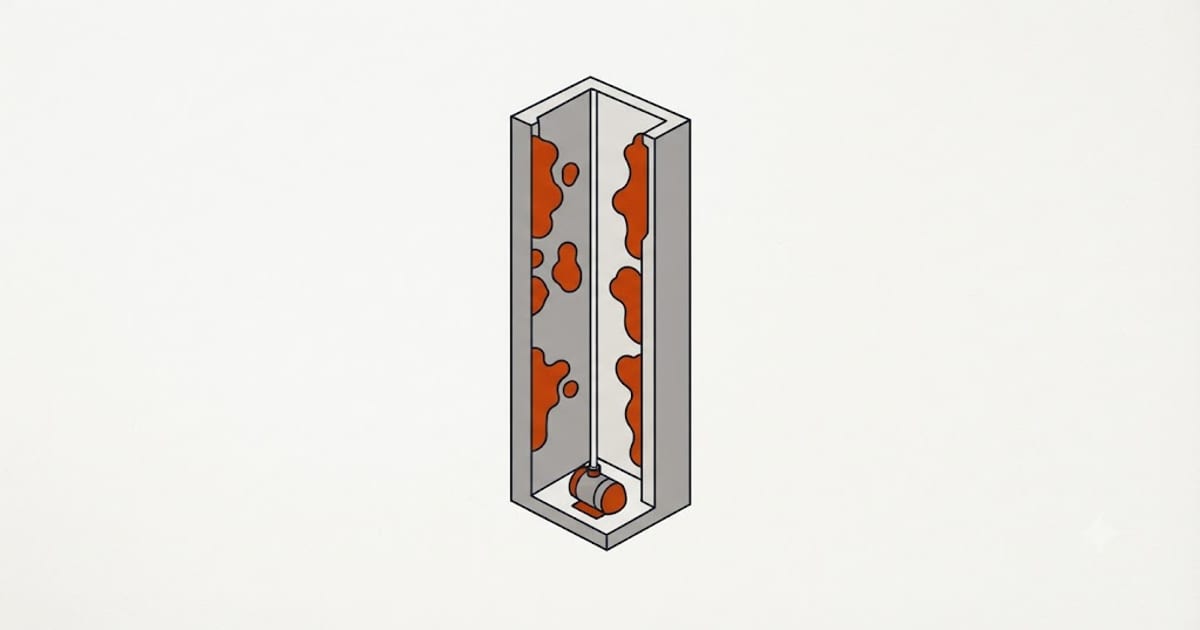
There are two completely different problems that both present as orange in the bathroom, and the treatment for one does nothing for the other. Telling them apart takes thirty seconds and saves a great deal of money.
The thirty-second test
Lift the toilet cistern lid and touch the deposit.
- A hard stain that has to be scrubbed off — dissolved iron oxidising when it meets air. This is a water chemistry problem and a filter fixes it.
- A soft, slippery, gelatinous film that smears — iron bacteria. This is a biological colony, and no filter in the world removes it, because it is not arriving with the water. It is growing in the plumbing, and largely in the well itself.
The gel is the tell. Iron stains; bacteria slimes.
What iron bacteria are
They are naturally occurring organisms that get their energy by oxidising dissolved iron, and in doing so they build a sheath of iron oxide slime around themselves. They colonise the well casing, the drop pipe, the pump, the pressure tank and the pipework — anywhere water sits.
They are not a health hazard. That is worth saying plainly, because the appearance suggests otherwise. What they are is destructive and persistent: they clog well screens, foul pressure switches, block softener resin beds, plug filter cartridges within weeks, and produce a smell often described as swampy, oily or like cucumber.
Why filtration fails
A filter treats water as it passes through. Iron bacteria are upstream of the filter and they are alive. Trapping the slime the colony sheds does not touch the colony, and the filter itself becomes an excellent place for the bacteria to grow — a cartridge that used to last six months starts blocking in three weeks.
Money spent on filtration before dealing with the colony is money spent on a symptom that will return.
What actually works: shock chlorination
The standard treatment is shock chlorination of the well, and it has to be done thoroughly to be worth doing at all.
The principle is to fill the entire system — casing, drop pipe, pressure tank, water heater and every branch of the household plumbing — with a strong chlorine solution, hold it for a period, then flush it out. Half measures fail: any part of the system that is missed reseeds the rest within weeks.
Key points that decide whether it works:
- The casing has to be washed, not just dosed. Circulating the chlorinated water back down the well and hosing the casing walls physically dislodges the slime layer. Chlorine alone does not penetrate an established biofilm.
- Every fixture must be run until chlorine is detected, then closed and left. This includes outside taps, the water heater and any rarely used bathroom.
- The contact time matters — typically several hours to overnight.
- The discharge is a problem. Flushing hundreds of gallons of chlorinated water into a septic system kills the bacteria the septic tank depends on. It needs to go somewhere else, and where that is depends on local rules.
Many owners have this done professionally for exactly these reasons.
Expect it to come back
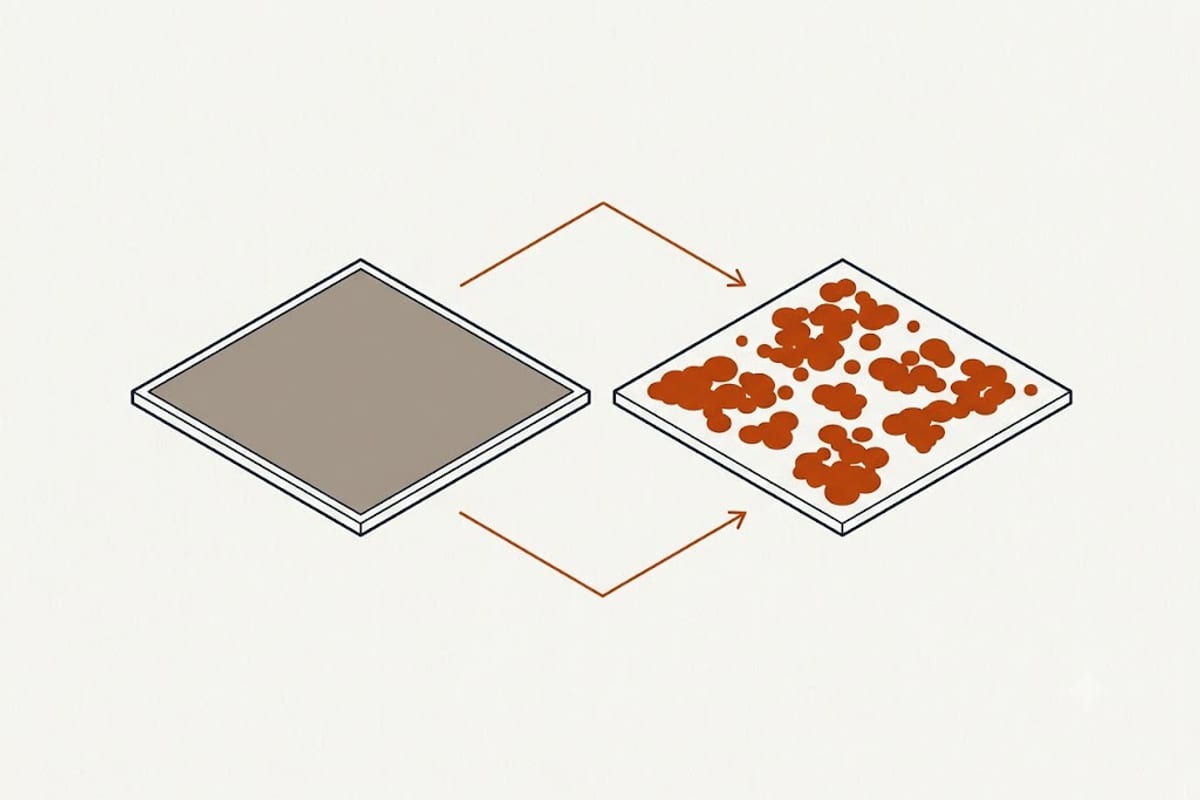
This is the part that goes unsaid, and it is the part that matters for planning. Shock chlorination knocks the colony back; it rarely eradicates it permanently. Re-treatment every one to three years is normal, and some wells need it annually.
Where regrowth is fast, continuous chlorination — a small metering pump dosing the line, followed by a contact tank and a carbon filter — is the durable answer. It costs more to install and needs ongoing attention, but it treats continuously instead of periodically.
The order of work
If you have both problems — bacteria and genuine dissolved iron, which is common — the sequence is not optional:
- Shock chlorinate first. Any equipment installed before this is fouled by the existing colony.
- Then test the water properly — iron, manganese, pH, hardness and hydrogen sulphide from a laboratory, not a strip. pH decides which iron treatment can work at all.
- Then install treatment sized to those results, with the iron removal ahead of any softener.
Installing the equipment first is the common and expensive order, and it ends with a fouled filter, a fouled softener, and the slime exactly where it was.
One thing worth ruling out first
If the orange appears only in the toilet cistern and nowhere else — not in the kettle, not on the bath, not in the shower — check whether an in-tank cleaning product is present or was used in the past. Some leave a residue that looks convincingly like biological growth. It is a cheap thing to eliminate before chlorinating a well.