The first step is always identification, because the treatments do not overlap.
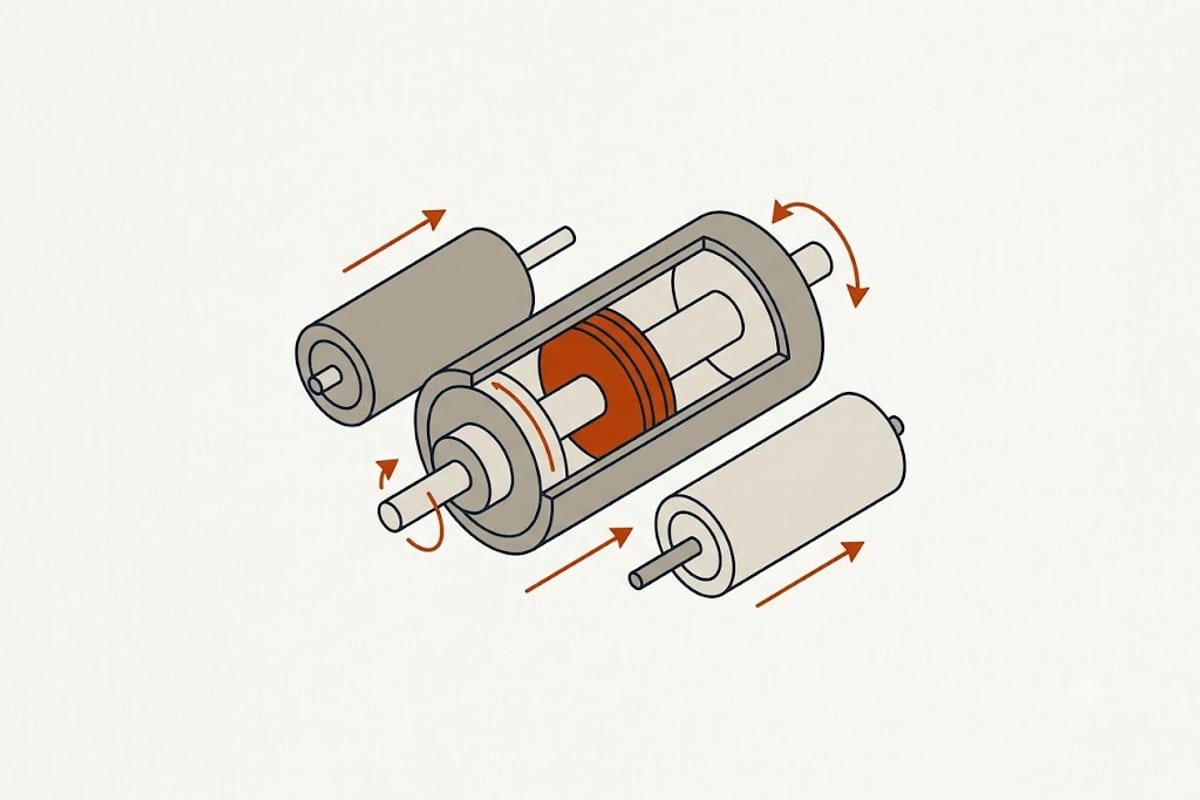
Clear-water iron
Ferrous iron, dissolved. The water comes out of the tap clear and turns orange after standing.
Concentrations of a few tenths of a part per million already stain fixtures and laundry.
Treatment: a softener handles small amounts, at the cost of capacity — the usual convention adds 4 to 5 gpg to the hardness figure per ppm of iron. Above a few ppm, an oxidising filter ahead of the softener is the right answer.
Red-water iron
Ferric iron, already oxidised, present as visible particles. The water is orange at the tap.
Treatment: filtration. A softener will not remove it and will be fouled by it.
Iron bacteria
A slimy orange or brown growth in the toilet cistern, in the well, and in the plumbing. It smells earthy or oily.
Not a health hazard in itself and a genuine nuisance, and it fouls everything downstream including treatment equipment.
Treatment: shock chlorination of the well, repeated, and then continuous disinfection where it recurs. Filtration alone does not address it, because the organism grows in the system.
Manganese
Black staining rather than orange, on fixtures and in laundry. Frequently accompanies iron.
Treatment: similar oxidising filtration, generally requiring a higher pH than iron does to oxidise properly — which is why a pH correction stage sometimes precedes it.
Hydrogen sulphide
The rotten-egg smell.
Establish where it appears first, because the source differs:
Only in hot water — the water heater's anode reacting with sulphate-reducing bacteria. The fix is at the heater: an aluminium-zinc anode, a powered anode, or disinfecting the tank. Not a whole-house treatment problem.
In both hot and cold — it is in the source water, and the treatment is at the well or the point of entry.
Only after the water sits — bacterial growth in the plumbing or the well.
Treatment for source sulphide: aeration, an oxidising filter, or chlorination followed by filtration, depending on the concentration.
The treatment sequence
Order matters, and getting it wrong wastes equipment:
Sediment filtration first, protecting everything after it.
pH correction, where needed, because oxidising filters work within a pH range.
Oxidation and filtration for iron, manganese and sulphide.
Softening, last, on water that no longer contains iron to foul the resin.
Putting a softener ahead of an iron filter is the most common error, and it destroys resin.
Get a test first
A certified laboratory panel giving iron, manganese, pH, hardness, sulphide and bacteria is what determines the equipment.
Buying a filter on the strength of orange stains, without knowing whether the iron is ferrous, ferric or bacterial, is how households end up with a vessel in the basement that did not fix the problem.
Maintenance
Every treatment stage is a consumable.
Filters need backwashing and media replacement. Oxidising media loses capacity. Chlorination needs solution and a contact tank. A softener needs salt and periodic resin cleaner where iron is present.
Equipment that is not maintained stops working silently, and the first sign is usually the stains returning — by which point the resin or the media may need replacing rather than servicing.
Shock chlorination
The standard treatment for iron bacteria and for a well that has tested positive for coliform after work or flooding.
A measured quantity of chlorine solution is introduced into the well, circulated through every fixture until chlorine is detected at each, left for a contact period, then flushed out until it is gone.
It is a procedure with specific steps rather than pouring bleach down the casing, and the health department or a well contractor publishes the local method, including how much and how long.
It is not permanent where the conditions that allowed the growth remain, which is why recurrence points at continuous disinfection or at a well construction problem — a poor seal, a damaged cap, surface water entering.
Whole-house or point-of-use
Staining, scale and smell are whole-house problems and need point-of-entry treatment.
Taste and specific contaminants — arsenic, nitrate, lead — are frequently better addressed at the kitchen tap with a reverse osmosis unit, which is far cheaper than treating every gallon in the house including the ones that flush toilets.
Deciding which of the two a given problem needs is the step that keeps treatment budgets reasonable.