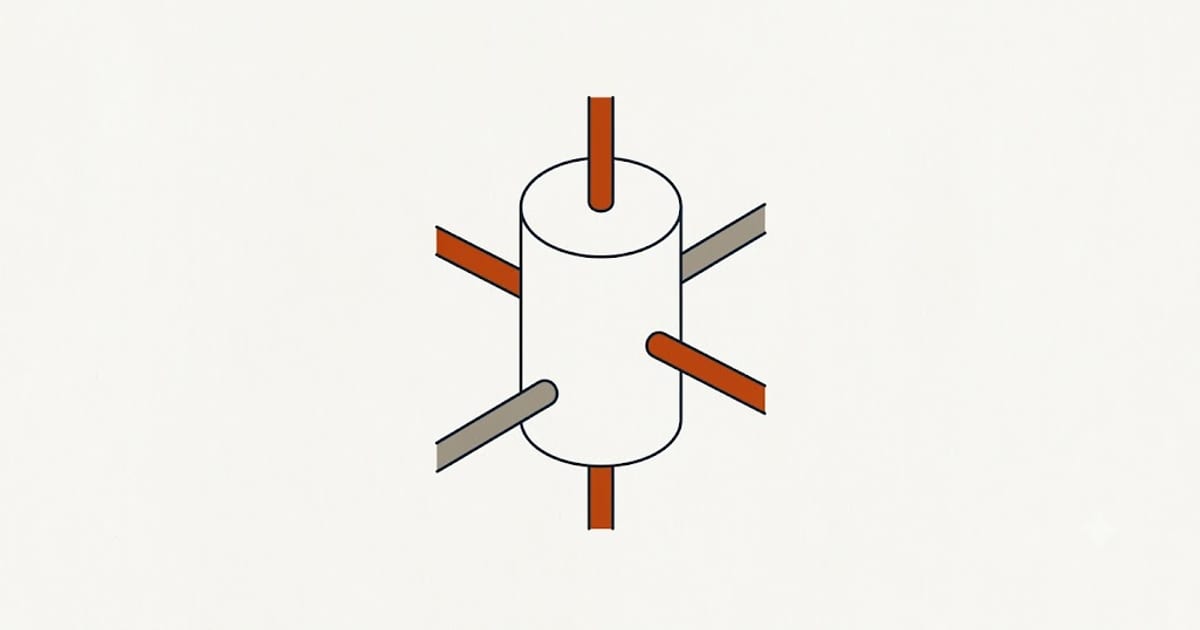
A softener needs four connections and a place to stand, and each of them has a rule worth getting right.
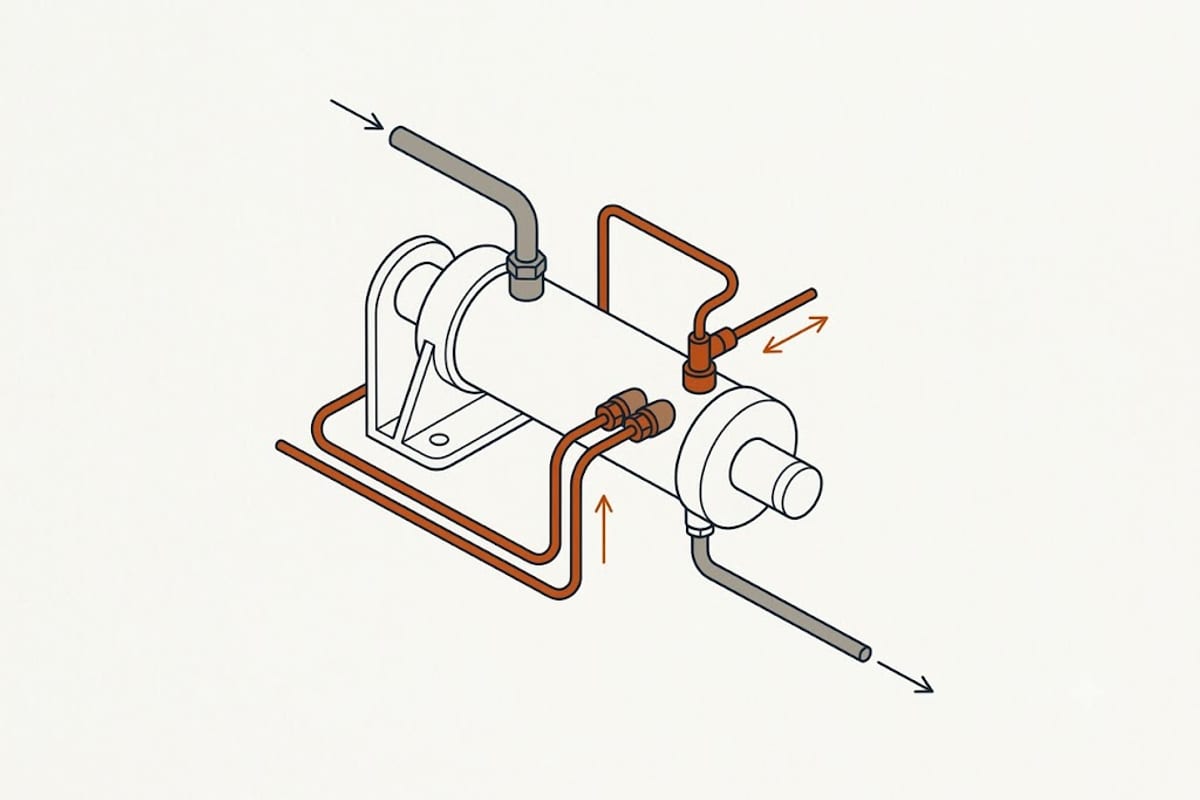
Where in the pipework
After the pressure tank on a well, or after the meter and any pressure reducing valve on municipal water.
After sediment filtration and any iron removal, because both fine particles and iron foul resin. A softener ahead of an iron filter is the most common sequencing error there is.
Before the water heater, obviously, since scale is what it is there to prevent.
The bypass
Every softener needs one, and most ship with a valve that does it.
It allows the unit to be taken out of service for repair without shutting off the house, and it allows a quick test: put it in bypass and see whether a pressure or a quality problem follows the unit.
What to leave unsoftened
Outside taps and irrigation, which have no use for softened water and would consume capacity and salt for nothing.
Frequently the cold kitchen tap, where sodium is a concern or where the household prefers untreated water for drinking and cooking.
Both are plumbing decisions taken at installation and awkward afterwards, so they are worth raising before the pipe is cut.
The drain
Regeneration discharges backwash, brine and rinse water.
Sized for the backwash flow, since a line that cannot take it backs up.
With an air gap at the discharge, so nothing can siphon back into the treated water. This is a code requirement and it is regularly missed.
Not somewhere that freezes.
And on a septic system, the added volume counts against the design flow. Local rules on discharging softener waste to a septic system vary from prohibited to required, so ask before plumbing it.
Power
A small outlet for the valve motor and controller.
A power cut resets the clock on some units, so the regeneration time drifts to the middle of the day — which is why a household suddenly gets hard water at breakfast after a storm.
Where to stand it
Where the salt can be carried. Bags are heavy, and a softener at the bottom of a narrow basement stair is a softener that runs out of salt.
Level, on a solid floor.
With space around it to remove the head and, eventually, to change the resin.
Near the drain and the power.
Not somewhere that freezes, and not where a leak would reach a finished space — or with a pan and a leak sensor if it must.
After installation
Set the hardness to the tested figure, plus the iron adjustment. A unit left at a factory default regenerates on the wrong schedule.
Set the regeneration time to the early hours.
Set the salt dose to an efficient rather than a maximum setting.
Test the treated water with a hardness kit a day later, and again a month later.
That last step is what confirms the unit is doing what it was bought to do, and it is the step almost nobody takes — which is how a softener that failed quietly goes unnoticed for a year.
The record worth keeping
Model and serial number, the hardness setting used, the salt dose, and the date the resin was installed.
Ten years later, when the bed is exhausted, that date is what tells a technician whether to replace the resin or look for something else.
Doing it yourself
A softener installation is within reach of a competent homeowner where the plumbing is accessible: a bypass, two connections, a drain line with an air gap and an outlet.
Two things make it a job for a plumber instead: where the connection has to be made in copper or galvanised rather than PEX, and where the local rules require permitted work — which some jurisdictions do for any alteration to the water distribution system.
Either way, the drain air gap and the discharge destination are the two items an inspector will look at.