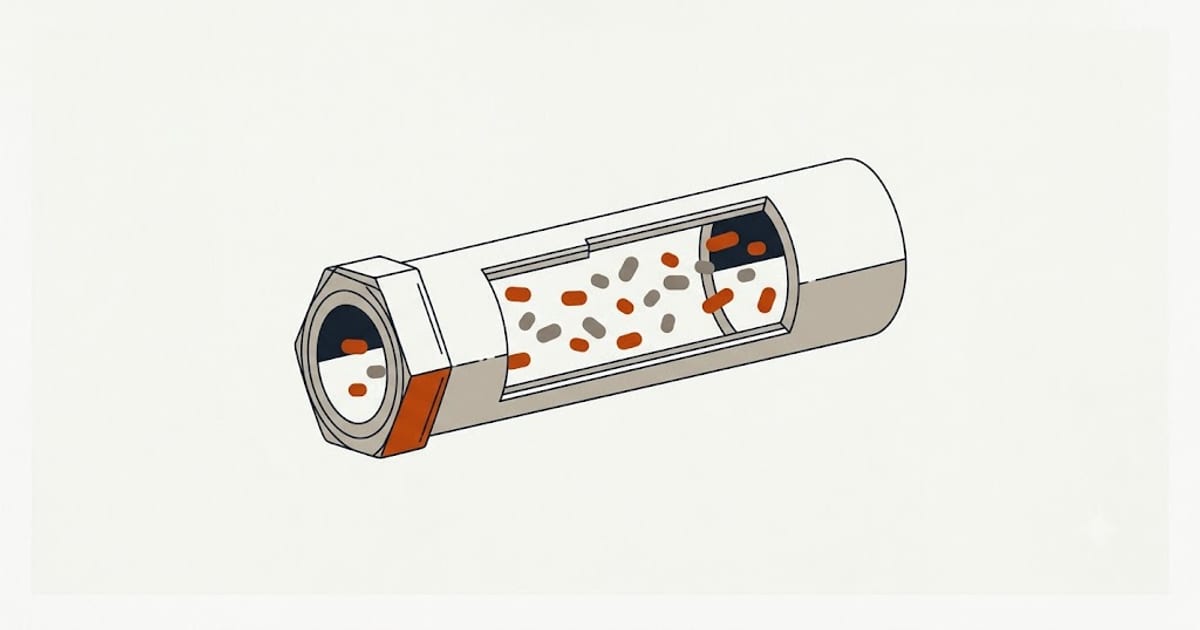
A conventional softener removes calcium and magnesium by ion exchange. A salt-free conditioner leaves them in the water and changes their behaviour.
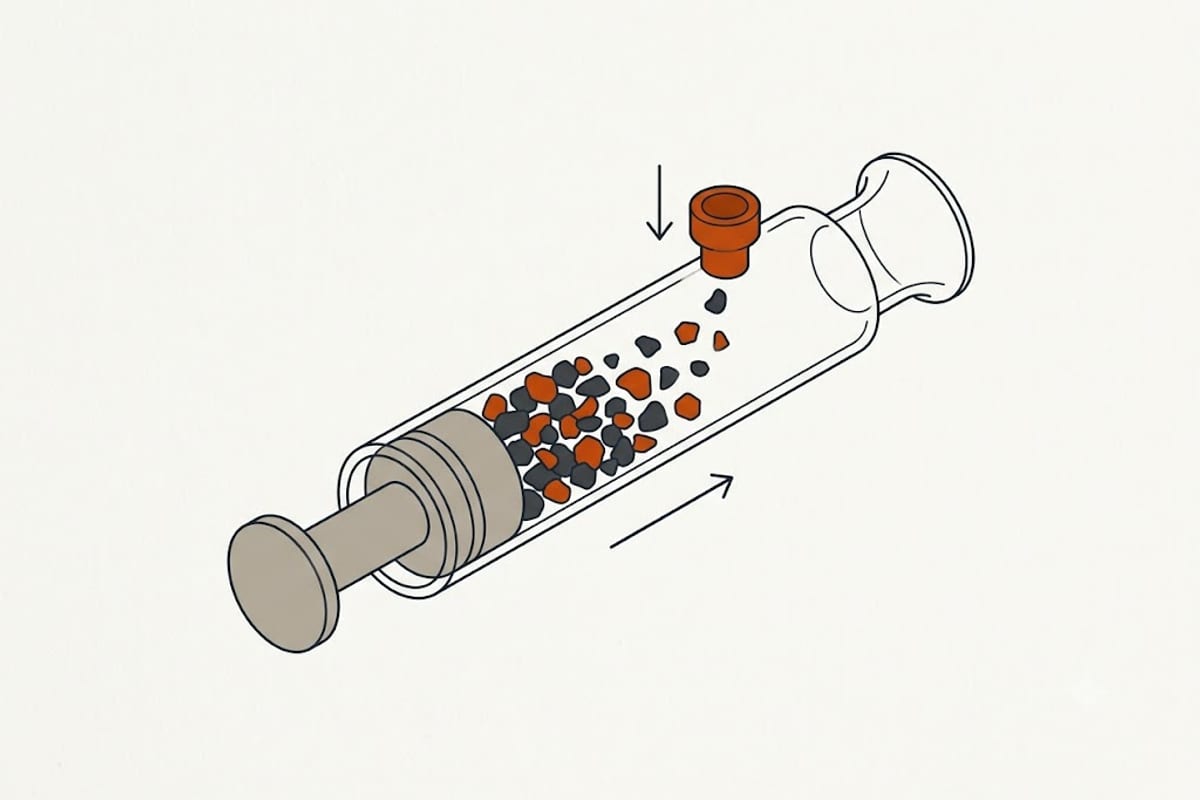
How the main type works
Template-assisted crystallisation (TAC) passes water over a medium with sites that encourage dissolved hardness to form microscopic crystals in the flow.
Hardness that has already crystallised in suspension is far less inclined to deposit on a heat exchanger or a pipe wall. It travels through and out.
There is peer-reviewed testing behind TAC showing meaningful reductions in scale deposition, and the results vary with water chemistry, temperature and flow.
What they do
Reduce scale deposition in pipes, heaters and appliances.
Require no salt, no electricity, no regeneration and no drain, which matters on a septic system and where discharge is restricted.
Need almost no maintenance — the medium is replaced every few years.
Add nothing to the water, so no sodium and no waste stream.
What they do not
They do not soften water. The hardness is still present. Soap will not lather as it does in soft water, laundry will not feel the same, and spotting on glassware will largely continue.
They do not remove iron, manganese or anything else.
They do not undo existing scale, though reduced deposition combined with normal use gradually improves things.
The distinction that matters
If the household's objection is scale in the water heater and on the shower screen, a conditioner addresses it.
If the objection is soap, laundry, skin and hair, it will not, and no amount of installation will change that.
Establishing which objection is actually being made is the whole of the decision, and it is where most disappointment with these products comes from.
Where they are the better choice
On a septic system, where a softener's regeneration volume is an added hydraulic load and its discharge may be restricted.
Where salt handling is impractical — a basement with stairs, an occupant who cannot lift bags.
Where there is no drain at the installation point.
Where sodium is a specific medical concern and potassium chloride is not wanted.
Where water is moderately hard and the objection is scale rather than feel.
Where a softener is the better choice
Very hard water where the full effect is wanted.
Where laundry and soap performance matter.
Where iron is present, which a conditioner does not address and a softener partly does.
The claims to be sceptical of
Magnetic and electronic descalers wrapped around a pipe are a separate category from TAC, and the independent evidence for them is weak.
Any device claiming to remove hardness without a regeneration cycle and without a waste stream is describing something that ion exchange chemistry does not permit. Hardness removed has to go somewhere.
Certification is the useful filter: look for testing to a recognised standard for scale reduction, not for adjectives.
What to check before buying
The flow rate rating, since these units have a maximum service flow like any other.
The medium replacement interval and cost.
A trial or return policy, since the effect depends on the specific water and is not guaranteed to satisfy the household's actual complaint.
Pretreatment still applies
TAC media are fouled by iron, and by chlorine on some products.
That means the same sequence rules as for a softener: sediment filtration first, iron removal where iron is present, and a carbon stage where chlorine would degrade the medium.
Installing a conditioner on raw well water with iron in it produces a unit that works for a season and then does not, which is frequently read as the technology failing rather than the installation.
Combining the two
Nothing prevents softening the hot supply and conditioning the cold, or softening the whole house and leaving one outside line untreated.
Where the objections are mixed — laundry matters, and the septic system cannot take a large discharge — a partial arrangement is often the practical answer, and it is a plumbing decision made at installation.