Two arrangements move water out of a well, and the depth to water decides which is possible.
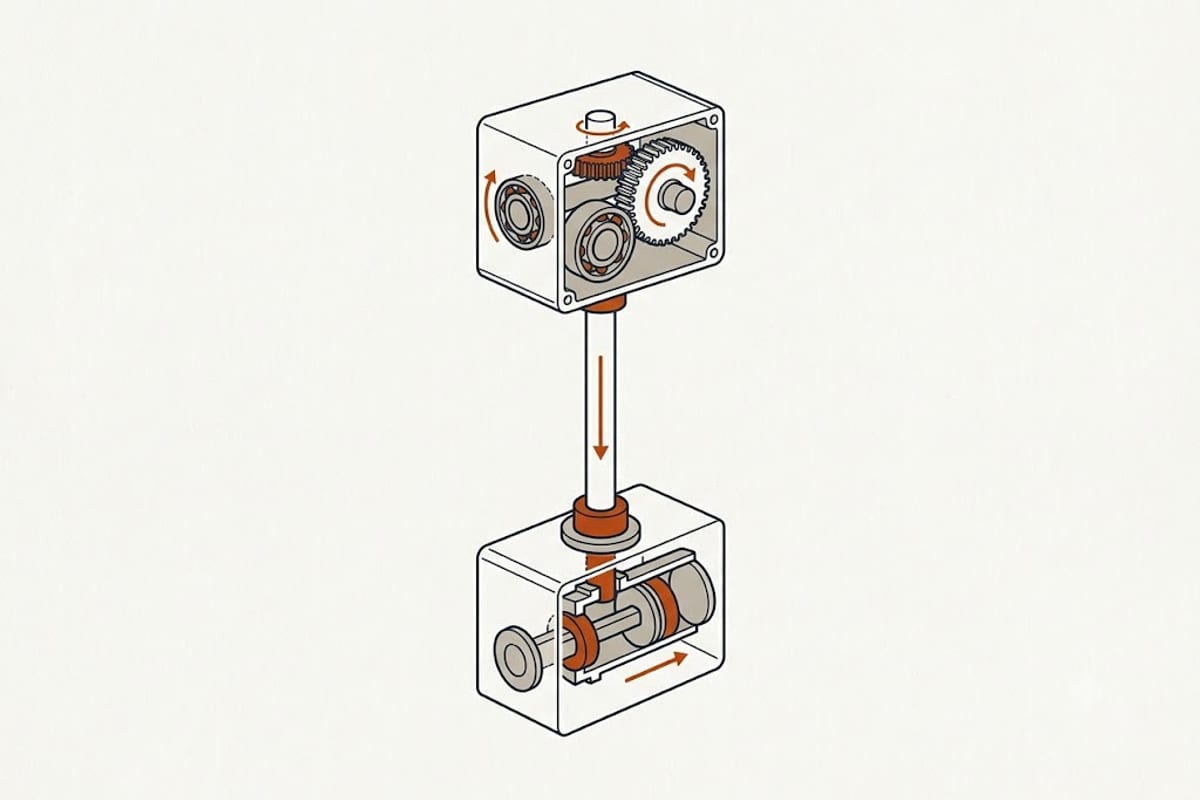
Jet pumps
Mounted above ground — in a basement, a well house or a pit — drawing water up through a suction pipe.
Shallow well jet pumps have a single pipe and work where the water is within roughly 25 feet of the pump. That limit is physics: atmospheric pressure will support a column of water about 34 feet at sea level, and practical losses reduce the working figure well below that.
Deep well jet pumps use two pipes and an ejector down in the well, which pushes as well as pulls and extends the range to perhaps 80 to 110 feet.
Advantages: accessible for service without pulling anything out of the well, and cheaper to replace.
Disadvantages: less efficient, noisier, needs priming, and limited in depth.
Submersible pumps
A sealed motor and pump assembly hanging in the well below the water level, pushing water up.
Advantages: far more efficient, quiet, no priming, no suction limit, and suitable for any depth a well reaches.
Disadvantages: replacing one means pulling it and the drop pipe and the wire out of the well, which is a truck and a crew.
This is what most modern wells have, and deeper wells have nothing else.
Which one is installed
If there is a pump in the basement or a well house, it is a jet pump.
If there is only a pressure tank and a well cap outside with a wire going into it, the pump is a submersible in the well.
Sizing
A pump is chosen on flow rate — gallons per minute the household needs — and total dynamic head, which is the vertical lift plus friction losses in the pipe plus the pressure the system must deliver.
Oversizing a pump against the well's yield causes it to draw the water level down to the intake and run dry, which destroys it. That is why the well's tested yield matters as much as the household's demand.
Undersizing leaves fixtures short at peak use.
What kills pumps
Short cycling, from a waterlogged or wrongly precharged pressure tank. This is the leading cause and it is preventable with a fifteen-minute annual check.
Running dry, from a well drawn down below the intake.
Sand and sediment, abrading the impellers.
Lightning and voltage problems, on a long run without proper protection.
Age, at roughly eight to fifteen years for a submersible in reasonable conditions.
When one fails
Symptoms range from no water at all to low pressure, air spitting from taps, or a breaker tripping.
Before concluding the pump has failed, the cheaper causes are worth eliminating: a tripped breaker, a failed pressure switch, a waterlogged tank, a stuck check valve, or a well whose level has dropped seasonally.
A well contractor tests the pump's amperage and the system's pressure before pulling anything, and that diagnosis is worth insisting on — pulling a pump is the expensive part of the job.
Constant pressure
A variable-speed controller on a submersible pump holds a steady pressure by varying speed rather than cycling between setpoints.
Steady pressure at every fixture, gentle starts, a much smaller tank, and it removes short cycling as a failure mode. It costs more and, on a deep well where replacing a pump is a major job, the extra life is worth weighing.
Keeping the paperwork
The well log filed with the state gives the depth, the casing, the static water level and the tested yield. The pump's model, horsepower and setting depth should be recorded at installation.
A contractor called to a failed pump works far faster with those figures than without them, and on an older property they frequently do not exist.