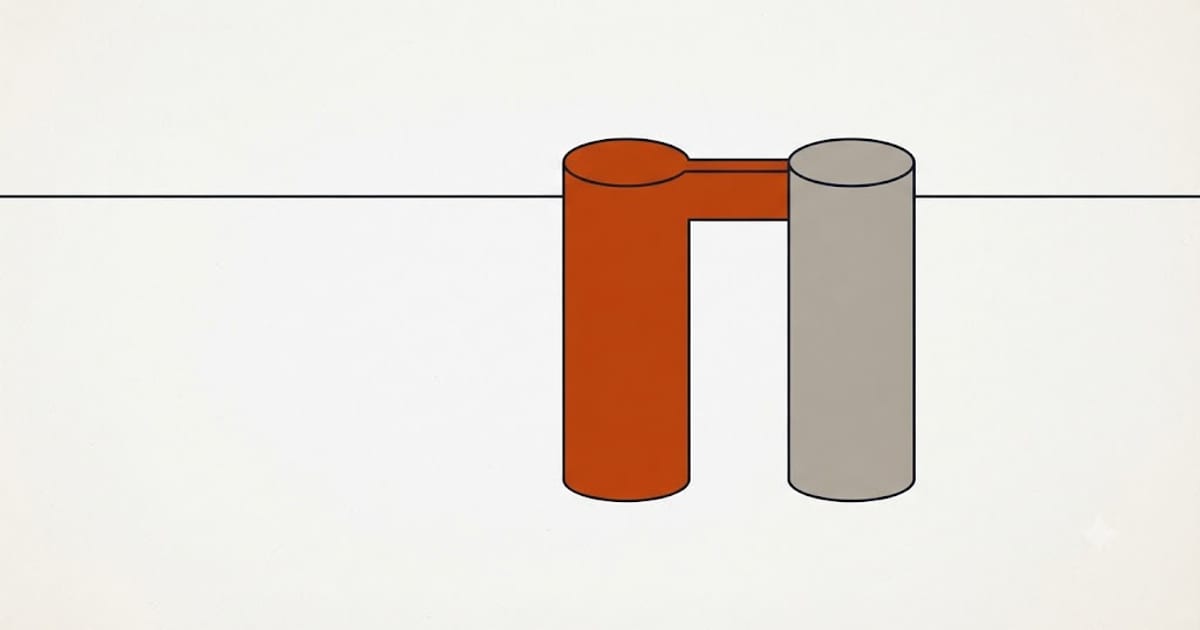
A softener that has been installed for a week and the kettle still furs, the glasses still spot, and the shower still feels the same. Before anyone is called back, five minutes of testing will tell you which of seven things is happening — and four of them are free to fix.
Test at the outlet first
Buy a hardness test kit. Draw a sample from a cold tap downstream of the softener, after running the water for a minute. Then draw one from an outside hose bib, which on most installations is plumbed before the softener.
- Outlet soft, tap hard → the softened water is not reaching that tap. See causes 1–3.
- Outlet hard as well → the softener is not softening. See causes 4–7.
That single comparison halves the problem.
1. It was plumbed after the branch it was supposed to serve
The most common installation error, and the most embarrassing to find. Softeners go in near where the service enters, and if the kitchen, an outside tap, or a whole wing of the house branches off ahead of it, that branch was never softened. The clue is that some taps test soft and others do not.
2. The bypass valve is still in bypass
Every softener has a bypass so it can be serviced without shutting the house down, and it is very easy to leave half-engaged after installation or after a salt fill. Some bypass handles look almost identical in both positions. Turn it fully to service and re-test.
3. It is a cold-only install and you are testing hot
Softeners treat the whole cold supply, and the water heater takes its feed from that. But the tank is full of the old hard water — a 50-gallon tank takes several days of normal use to turn over. Hot water testing hard in week one is expected and resolves itself.
4. The hardness setting is wrong
The single most common programming fault. The unit needs your hardness in the units it expects. One grain per gallon equals 17.1 ppm, so a softener programmed with 250 when the number should have been 15 gpg — or the reverse — is out by a factor of seventeen. Set too low and the resin exhausts long before the next regeneration.
Check the utility report or a lab test, confirm which unit the softener wants, and enter it deliberately.
5. Iron was never accounted for
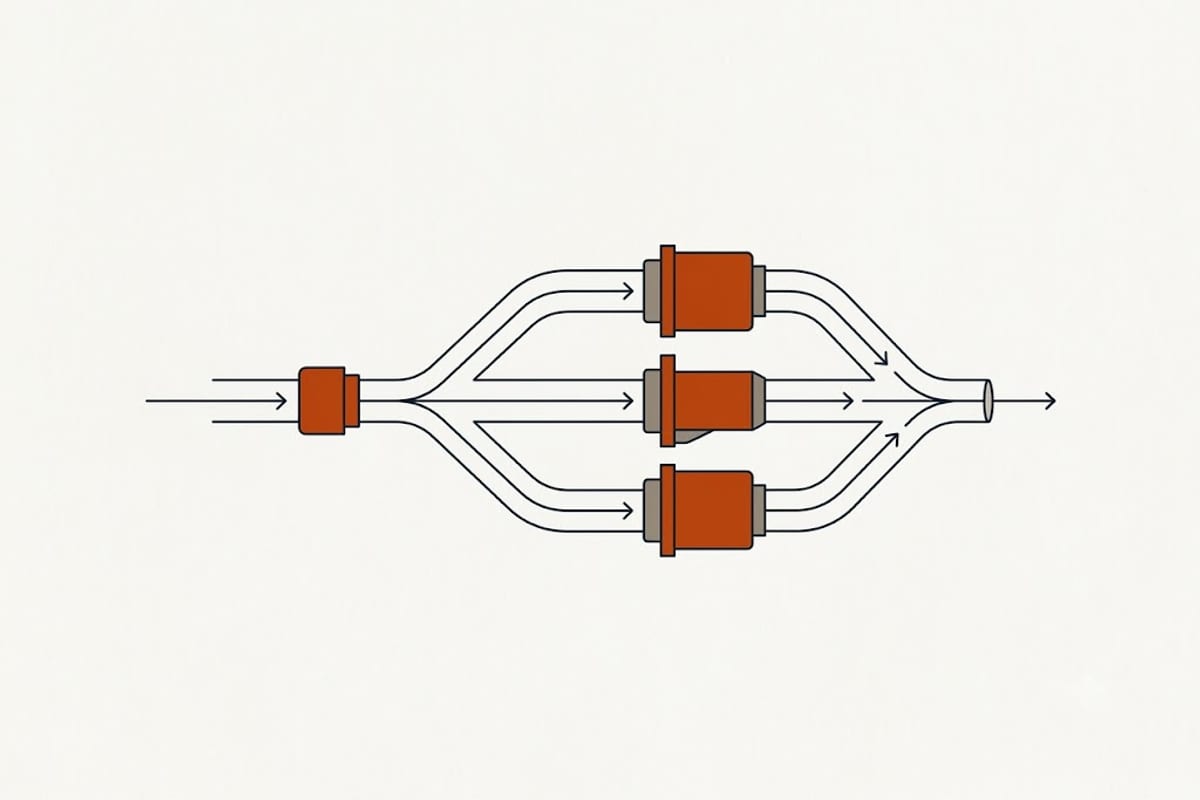
Iron eats softener capacity: roughly 4 gpg for every 1 ppm of dissolved iron. Water at 12 gpg with 3 ppm of iron behaves like 24 gpg. A unit sized on hardness alone runs out halfway through the cycle, every cycle.
Worse, if pH is above 7 the iron has already oxidised into particles, and particles do not bind to the resin — they coat and foul it. A softener on that water stops softening within months whatever the setting says. That needs an iron filter ahead of it, not a bigger softener.
6. There is no salt, or the salt has bridged
Obvious, and still worth checking properly. A salt bridge is a hard crust that forms across the brine tank, leaving an air gap beneath it. The tank looks full from the top and there is no salt in contact with the water below. Push a broom handle down through the salt; if it hits a solid layer and then breaks through into a void, that is a bridge.
Salt mush at the bottom — a sludge that will not dissolve — does the same thing from the other direction and needs the tank emptied and cleaned.
7. The resin bed is fouled or channelled
Chlorine from municipal water degrades resin over years. Iron fouls it. A unit sized far too large regenerates so rarely that the water carves preferential paths through the bed and passes through untreated — which is why oversizing is not the safe error people assume.
Fouled resin is diagnosed by elimination and usually means replacing the bed or the unit.
The two settings to check while you are in the menu
Regeneration time. Default is typically 2am. If the household is awake and drawing water then — shift workers, a business at home — regeneration dumps hard water into the house at exactly the wrong moment.
Salt dose. Higher salt settings give more capacity per cycle but less capacity per pound. An efficient setting removes around 4,000 grains per pound of salt; a high setting drops that toward 2,500. If the unit is regenerating on schedule and the salt use looks enormous, this is why.
What "soft" should measure
Under 1 grain per gallon. Not zero — most units leave a trace — but a test that comes back at 5 gpg on water that entered at 15 is not a partially working softener. It is one that is bypassing, mis-set, or out of capacity, and the seven causes above will say which.