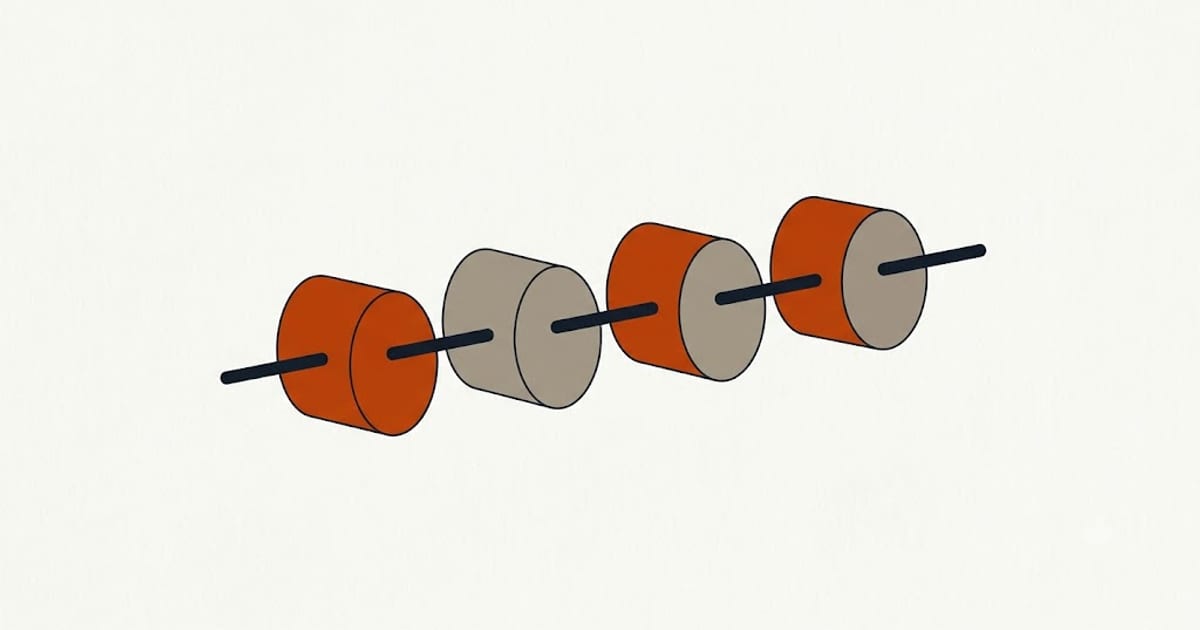
Water treatment is a sequence, and each stage protects the next.
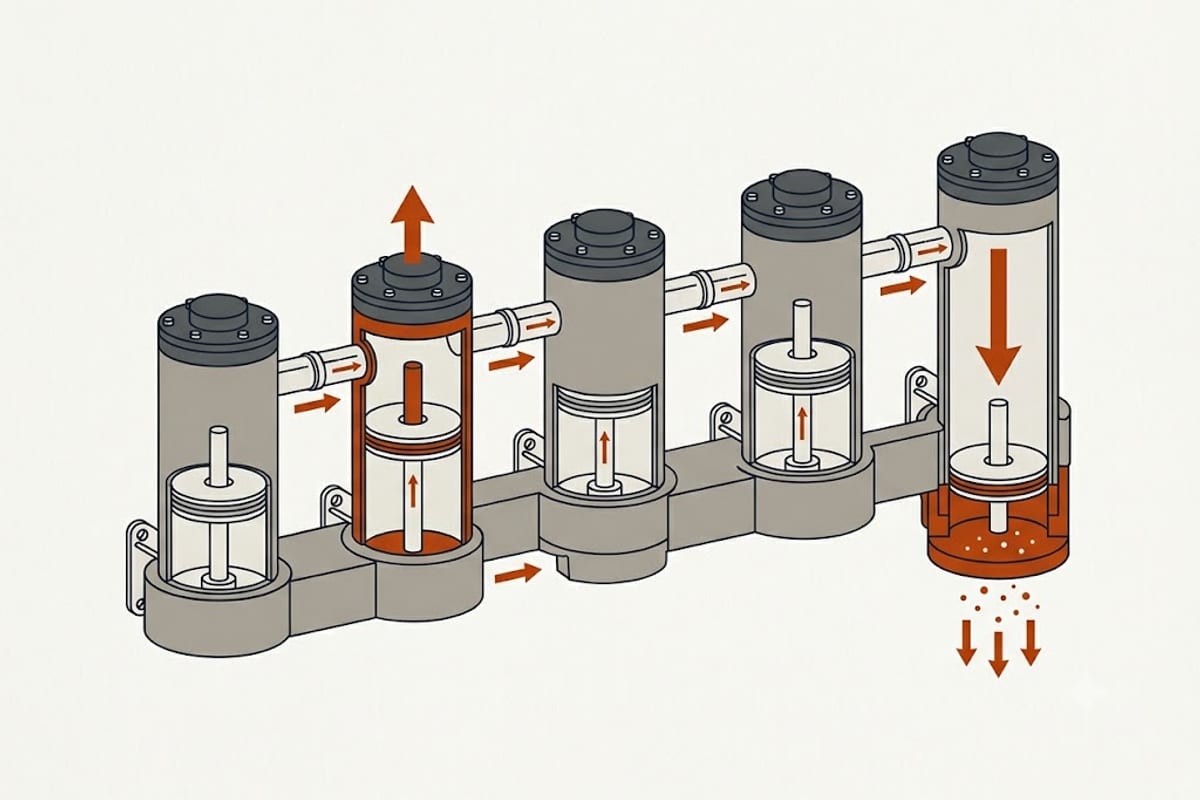
The order
1. Sediment filtration. Sand, silt and particulate, protecting everything downstream. On a well with any sand, this is not optional.
2. pH correction, where the water is acidic — a neutralising filter or a chemical feed. Placed here because oxidising media work within a pH range and because acidic water corrodes plumbing.
3. Oxidation and filtration for iron, manganese and hydrogen sulphide.
4. Disinfection, where bacteria are a concern — ultraviolet or chlorination with contact time.
5. Softening.
6. Point-of-use — a reverse osmosis unit at the kitchen tap, on water that has already been filtered and softened.
The most common sequencing error is a softener ahead of an iron filter, which fouls the resin.
Bypasses
Every stage gets its own bypass valve.
That means any unit can be taken out of service for repair without shutting off the house's water, and any unit can be isolated to test whether it is the source of a problem.
A treatment train plumbed without bypasses means the household is without water for the duration of any service call, and it makes diagnosis much harder.
The drain
Backwashing filters and softeners send water to a drain, at a rate that matters.
An adequate drain, sized for the backwash flow. A line that cannot take it backs up.
An air gap at the discharge, so nothing can siphon back into the treated water. This is a code requirement and it is regularly missed.
A drain that will not freeze, where the run passes through unheated space.
And on a septic system, the added volume counts against the design flow, which is worth checking against the local rules before plumbing it there.
Where the equipment goes
Near the pressure tank and the drain, which is usually a basement, a utility room or a well house.
Where it will not freeze.
With space around it — salt bags have to be carried in, media has to be changed, and vessels have to come out.
With a floor drain or a pan under anything that can leak, which is all of it.
Not in a finished space if it can be avoided.
Test ports
A sample tap between each stage is inexpensive at installation and it is what makes diagnosis possible afterwards.
With them, a technician can measure what each stage is achieving. Without them, the only measurements available are raw water and finished water, which says nothing about which unit has stopped working.
Whole-house or point-of-use
Whole-house for scale, staining, smell and sediment — problems affecting every fixture.
Point-of-use for drinking water contaminants, where treating the few gallons a day that are consumed is a fraction of the cost of treating the thousands that are not.
Deciding which category each identified problem falls into is what keeps the equipment list rational.
What to ask an installer
Which stage addresses which test result. Why they are in that order. Whether each has a bypass and a sample port. Where the drain goes and whether there is an air gap. And what each stage costs to maintain per year.
The last question is the one that reveals the true cost, and it is the one least often asked.
The running cost nobody quotes
Salt for the softener. Media replacement on each filter, at its own interval. UV lamps annually and the sleeve cleaned. RO prefilters and membranes. Chemical feed solution where used.
Added up, a full treatment train on difficult well water has a meaningful annual cost, and it is entirely predictable. Asking for it as a figure before buying is how a household avoids being surprised by it in year two.
Commissioning
After installation, test the finished water against the original panel.
That is the only way to know each stage is doing what it was bought to do, and it is the step almost nobody takes. It costs one laboratory test and it converts an assumption into a fact.